“The most solid scientific proof of all manifests in bringing a concept from thought into material reality.” — John G. Williamson
This page highlights:
1. Innovations & Inventions: 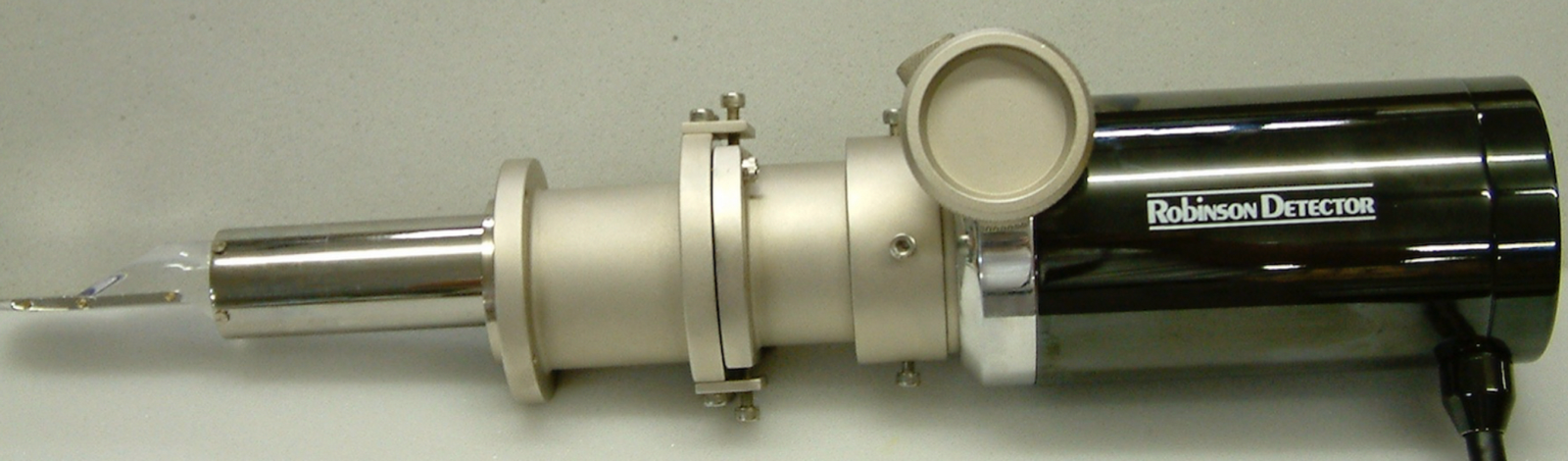 Previous engineering innovations and inventions by Quicycle members.
2. Think Tank:  Technologies that are patented or in development by Quicycle members.
1. Innovations & Inventions
1.1. The Quantum Point Contact: The First Single-Electron Nano-Device
1.2. Uncoated Specimen Electron Microscopy: Viewing Water in a SEM Vacuum
1.3. The Robinson Backscattered Detector: Enhancing The Versatility Of Electron Microscopes
1.4. The Memfree Electroflocculation Process For Water Purification
1.5. Laser Mammography
1.1. The Quantum Point Contact
Dr. John G. Williamson — Solid State Physics
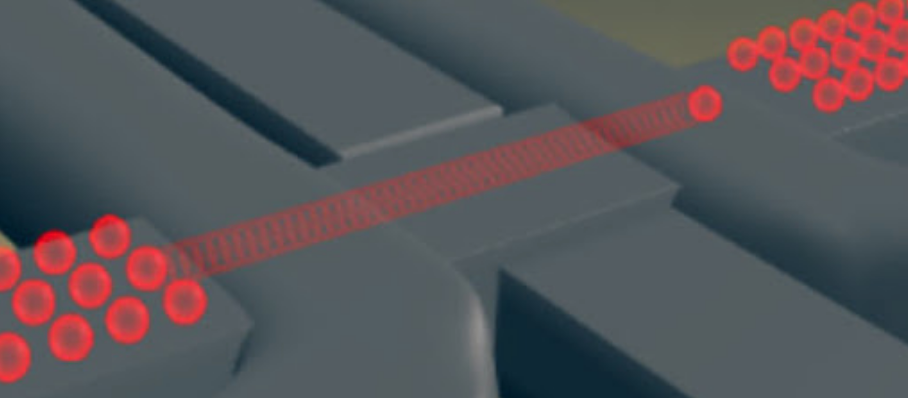
Dr. John G. Williamson, while working as a solid-state and experimental physicist at Philips Research Laboratories in the Netherlands, conceptualized, and was part of the team that developed, the first seminal nano-electronic device — the first semiconductor device to be dubbed “nano” — the quantum point contact.  Article: 1988
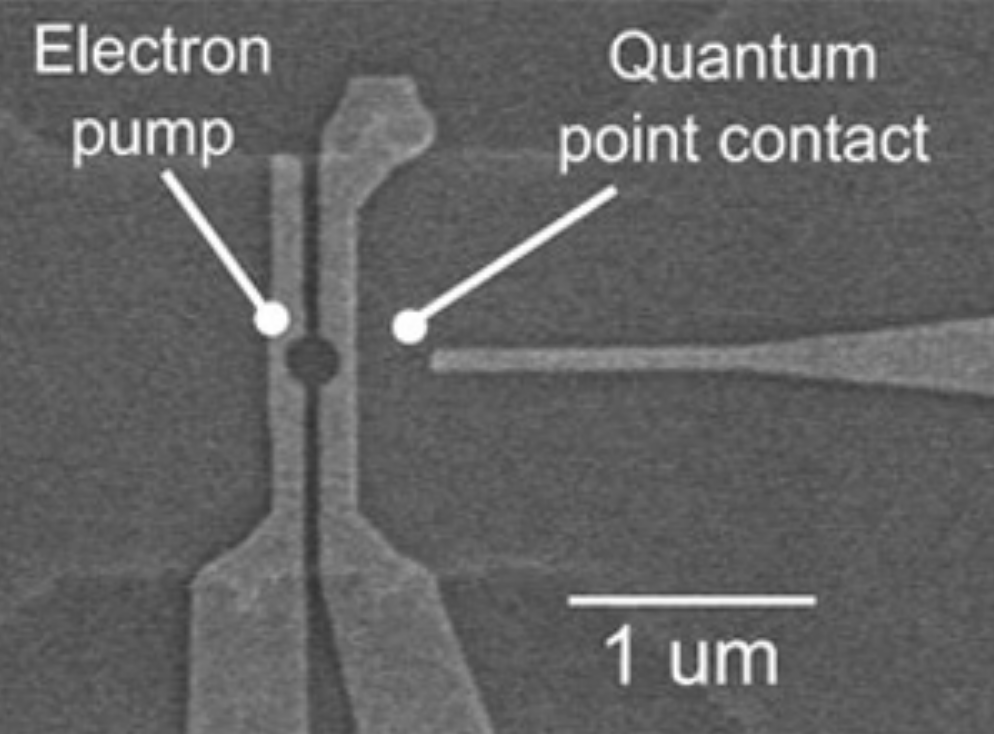
Williamson also designed the first solid-state single electron device, the single electron pump. Article: 1989
He was also the first to measure the effective size of a single electron’s charge distribution in the solid state, and found it to be of the order of tens of nanometers. Article : 1990
1.2. Uncoated specimen microscopy
Dr. Vivian Robinson — ELECTRON MICROSCOPY
Dr. Vivian Robinson developed a technique for looking at uncoated specimens in their natural state in a scanning electron microscope (SEM), as well as a variation of that technique that enabled specimens with liquid water to be viewed in the vacuum system of a scanning electron microscope (SEM). It provides the ease of specimen preparation of an optical microscope with the resolution and depth of focus of SEMs.
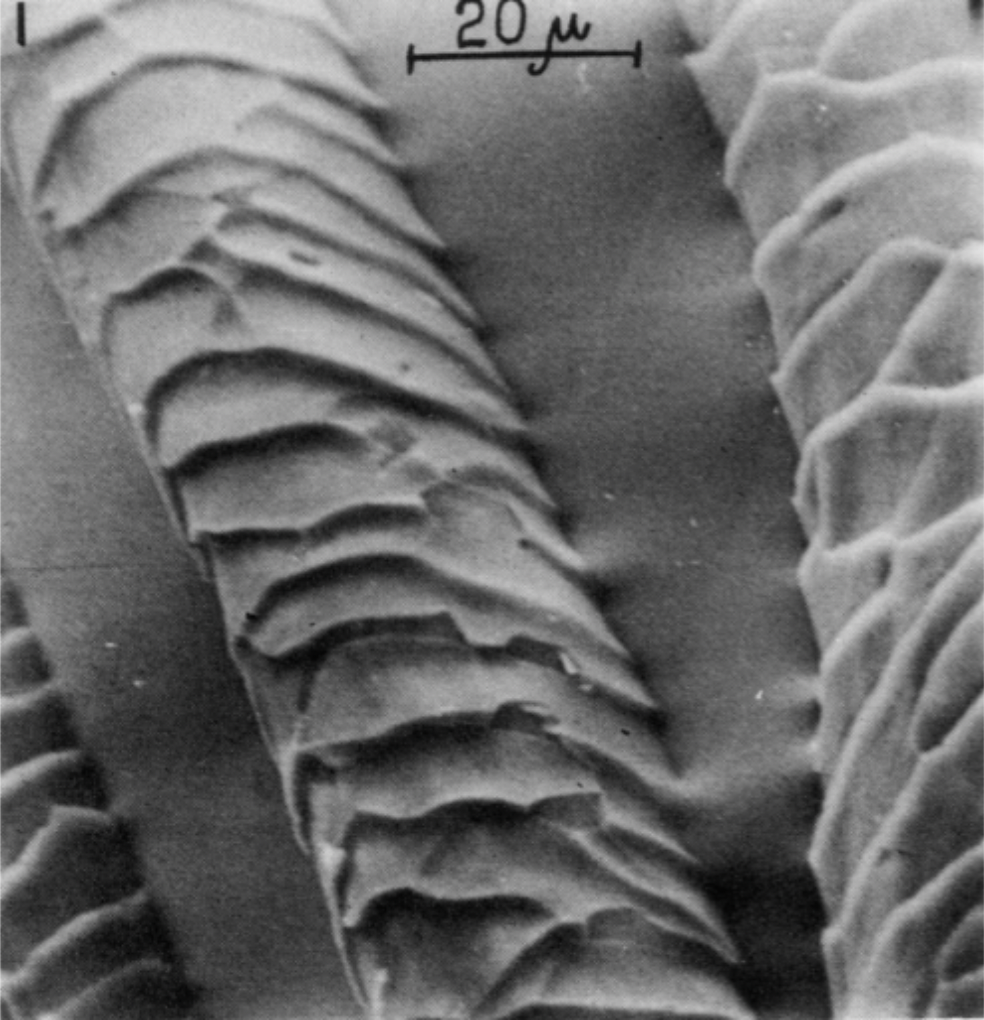
The first image taken of liquid water in contact with a biological material, 1974. Article: (1975)
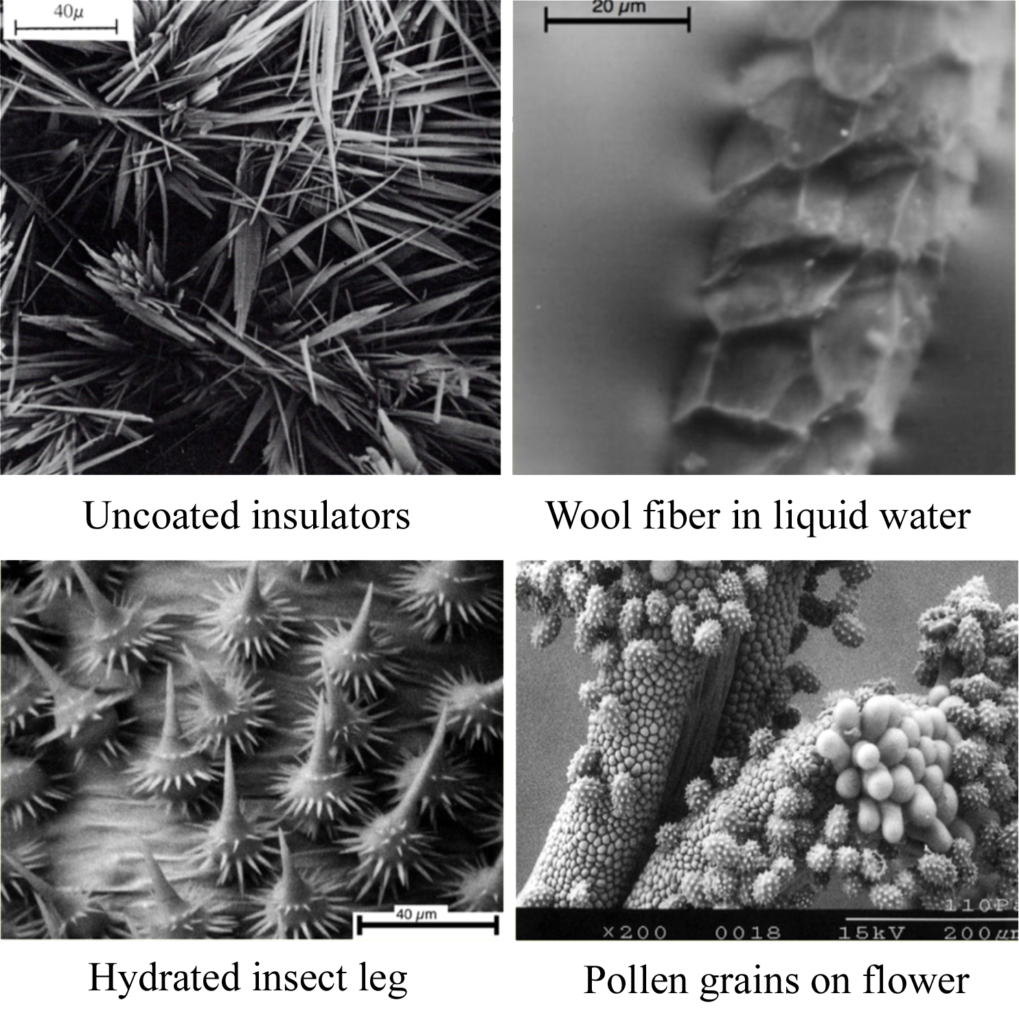
These images were not possible prior to Robinson’s invention:
1.3. The Robinson Backscattered Detector
Dr. Vivian Robinson — ELECTRON MICROSCOPY
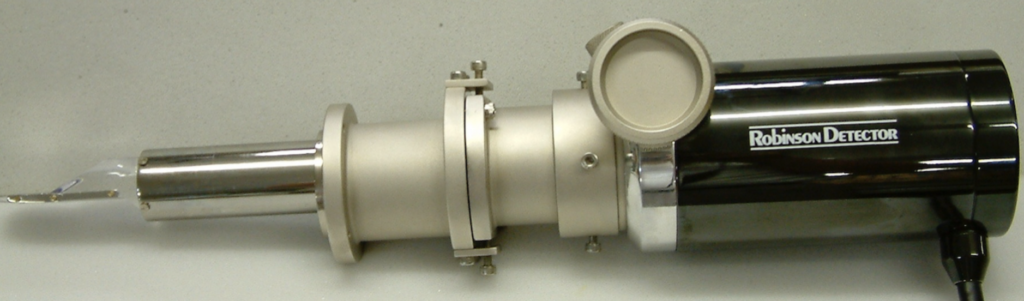
Invented, designed, and manufactured the Robinson Backscattered Electron Detector, the world’s first improved and highly efficient backscattered electron detector for use in scanning electron microscopes (SEMs). It significantly enhanced the versatility of scanning electron microscopes.
Patent: Robinson Backscattered Electron Detector
Manufacturer’s website: ETPSemra
1.4. Memfree Electroflocculation For Water Purification
Dr. Vivian Robinson — WATER TREATMENT
Invented the Memfree Electroflocculation Process for purifying water of biotic & abiotic pollutants, without the use of filters or chemicals, on both the small- and industrial-scales.
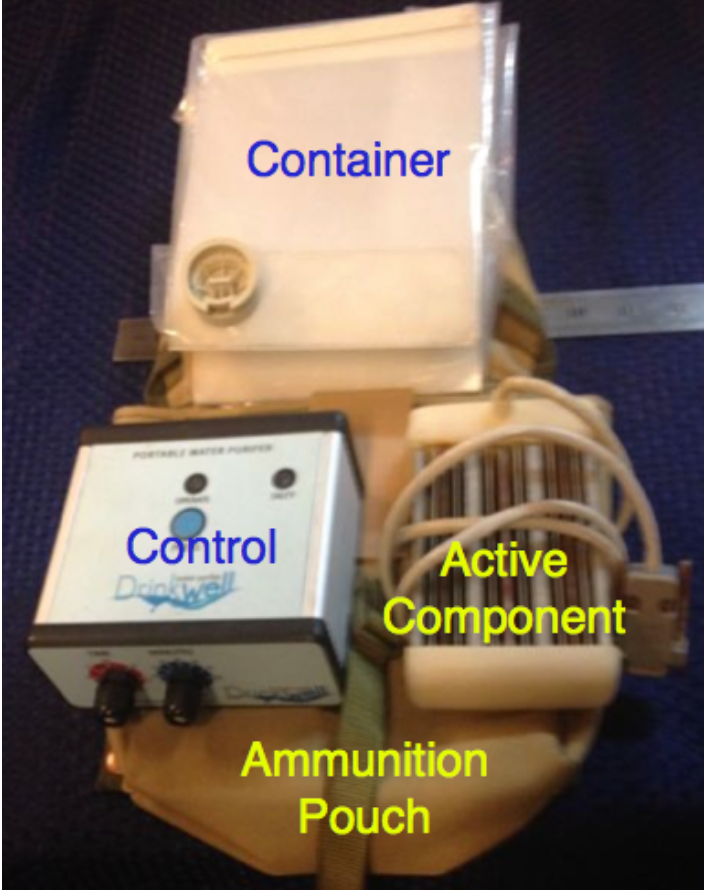
Small water purifier could clean 1 gallon (4 litres) of water in 30 mins.
DC: 5V – 15V
Power: 1 – 2 mA/hr per gallon.
Weight: < 2 kg (battery excl.)

Development of an in-situ process for the removal of pollutants from large bodies of relatively still polluted water at or near neutral pH. Suitable for lakes or mining tailings dams.
Patent: Memfree Electroflocculation Process for water purification
1.5. Laser Mammography
Dr. Martin B. van der Mark — MEDICAL OPTICAL IMAGING
Dr. Martin van der Mark, while working as a research physicist and photonics expert at Philips Research Laboratories in the Netherlands, conceptualized, developed, and brought to fruition a new technology for laser mammography on benign cysts in the breast — diffuse optical tomography (DOT) .

DOT can visualize benign cysts in the breast and elucidate their high water and low total hemoglobin content by spectroscopic analysis.
Article: 2008
2. Think Tank
Members of Quicycle have several patents held and in various stages of development.
In addition, we have several engineering projects in various stages of development. These are based upon and made possible by the theories of sub-quantum mechanics, developed by Dr. John G. Williamson (CERN/Philips Research Laboratories/Glasgow U.), Dr. Martin B. van der Mark (Philips Research Laboratories), as well as Dr. Vivian Robinson (ETP Semra), who extends this model to include nuclear physics.
2.1. Sustainable Energy From Controlled Nuclear Fusion
A new approach is proposed for generating clean energy safely and cheaply via controlled nuclear fusion. It promises to overcome many of the problems that have plagued conventional fusion development for decades, and it has none of the major disadvantages associated with current fusion projects. The proposed design will feature a small, portable reactor in the megawatt power regime. The goal is a modular and scalable solution that can serve a single large-scale vehicle, a single factory, a remote town, or even a large city.
Imagine a 3-5 MW power generator that fits in a standard shipping container.

Robinson Quantized Fusion (RQF) is based upon a theoretical foundation that successfully yields solar (even) nuclear abundances to great accuracy over seven orders of magnitude. It employs the intermediate energy regime, modeled after a specific solar fusion pathway. It uses abundant and safe fuels and results in no dangerous by-products or radiation.
PROJECT STATUS:
Design complete.
Modest funding is required to implement the staged development roadmap.
2.2. Nonlinear Photonics
In development.
2.3. Software Platform For Relativistic Quantum Mechanical Modeling
In development.
Parties interested in partnership or development opportunities involving Quicycle technologies may contact us here. (Serious inquiries only, please.)