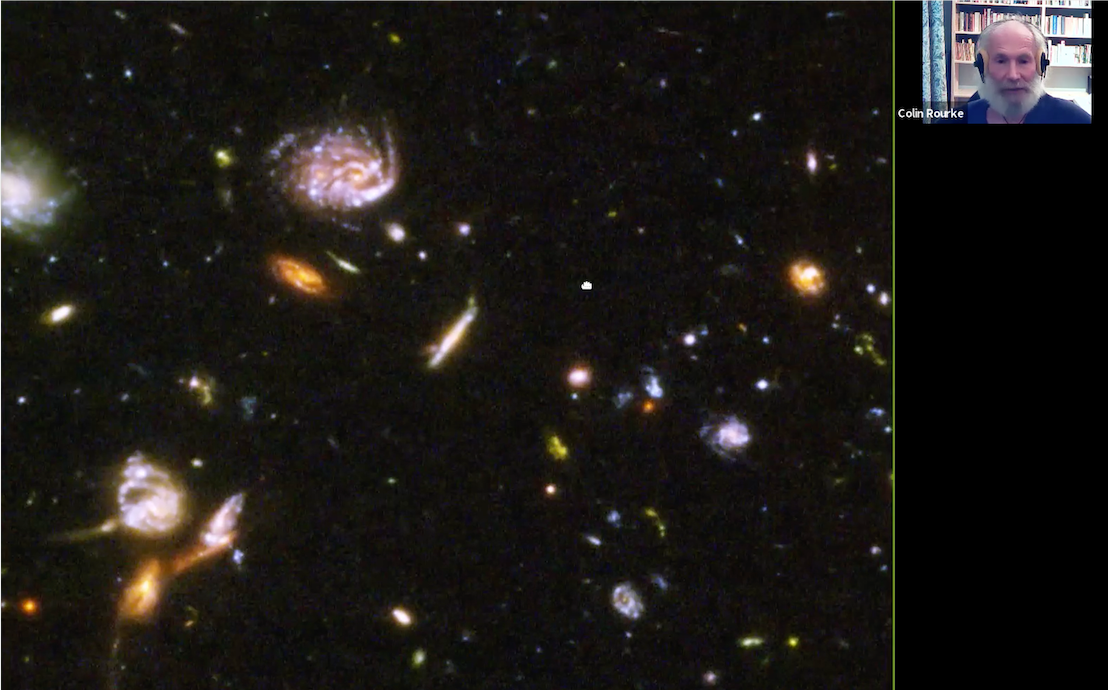
Prof. Colin Rourke’s presentation on De Sitter Space. Willem de Sitter found his eponymous space in 1917 at approximately the same time that Einstein completed his general relativity theory. Regarded as a curiosity it was emasculated by Hermann Weyl’s widely accepted “coherency postulate”. But, properly understood, the space fits recent observations (WMAP and Supernovae) perfectly and provides a fully Copernican model for the universe with no Big Bang, dark matter or inflation. As a bonus it also gives a non-cataclysmic explanation for Gamma Ray Bursts.
Recorded: GMT20200809
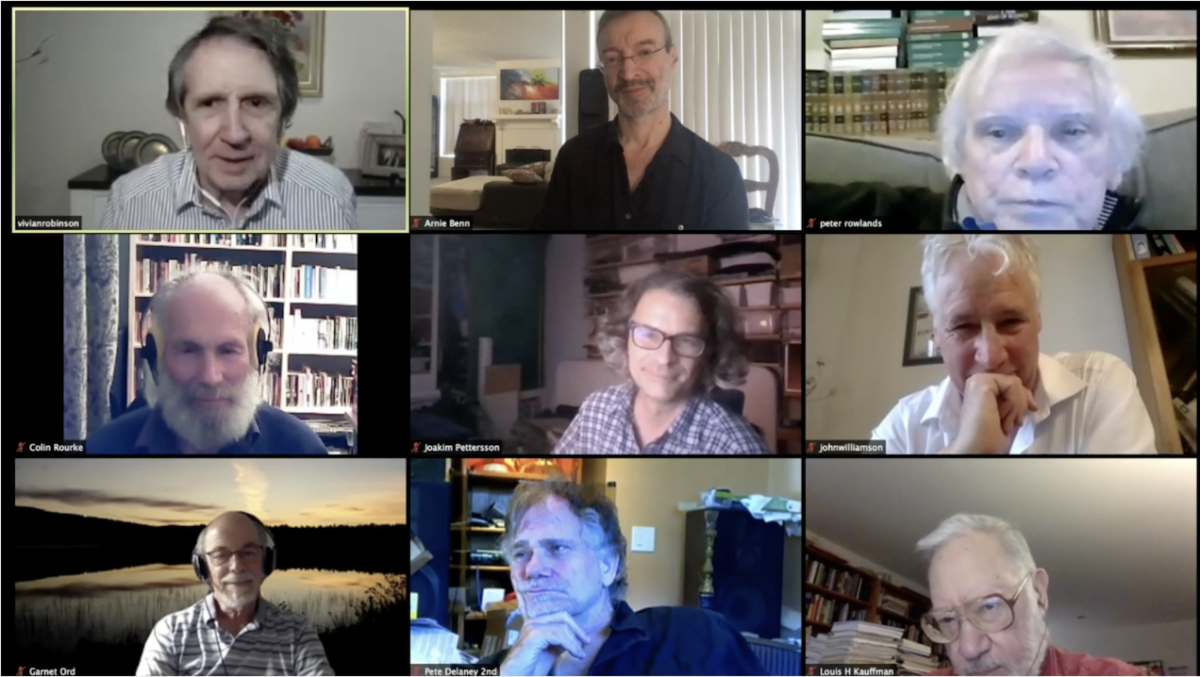
This is the QA&D session following Dr. Vivian Robinson’s presentation (QC0095) on how the behavior of electrons in atoms, as well as chemical bonding, is dominated by the angular momentum of the electron.
Recorded: GMT20200802 190451
Buy the book:
HOW TO BUILD A UNIVERSE: Beyond The Standard Models by Vivian NE Robinson
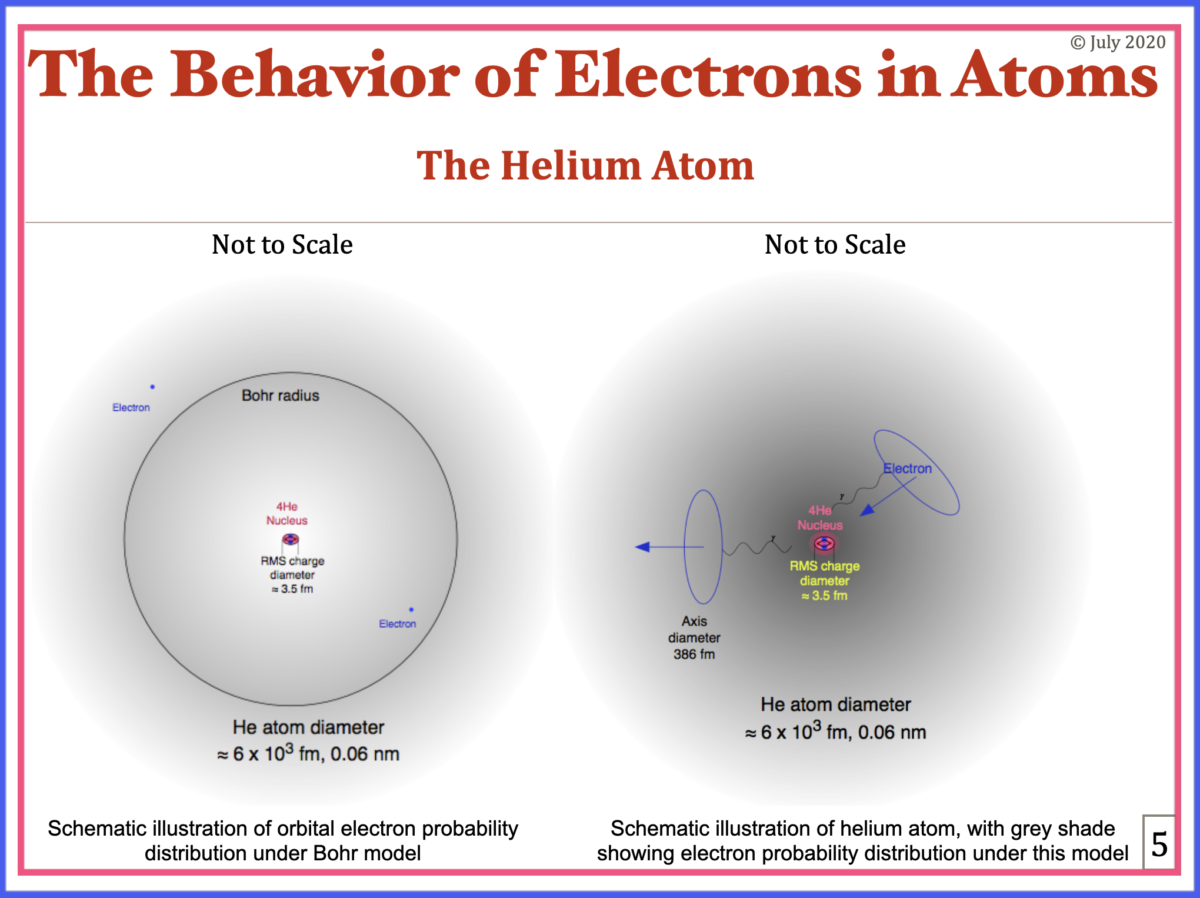
Dr. Vivian Robinson explains how the behavior of electrons in atoms, as well as chemical bonding, is dominated by the angular momentum of the electron.
Buy the book:
HOW TO BUILD A UNIVERSE: Beyond The Standard Models by Vivian NE Robinson
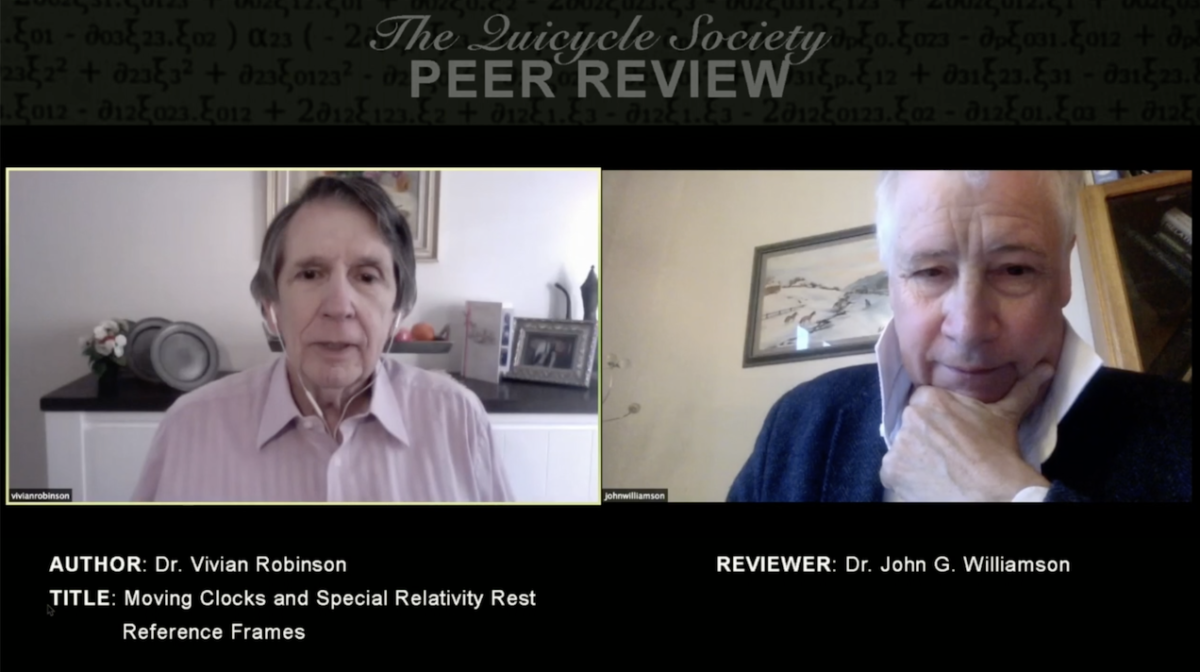
Quicycle Peer Review: Dr. John G. Williamson reviews Dr. Vivian Robinson’s Paper “Moving Clocks and Special Relativity Rest Reference Frames.”
The paper can be viewed at https://quicycle.com/quicyclejournal/
This is the QA&D session following Dr. John G. Williamson’s presentation (QC0099) describing the relativistic quantum mechanics of collective systems in the new paradigm: Atoms, high-temperature superconductors and the quantum fluid in the solid state. Thinking within the new relativistic quantum theory allows a hitherto unavailable physical insight into the inner workings of “elementary” particles, both alone and in combination with each other. Among other things the talk will discuss the paired di-electron boson in high-temperature superconductors, the quasiparticle electron involved in quantum transport, and the synergy of electrons, protons and neutrons in atoms.
Recorded: GMT20200726
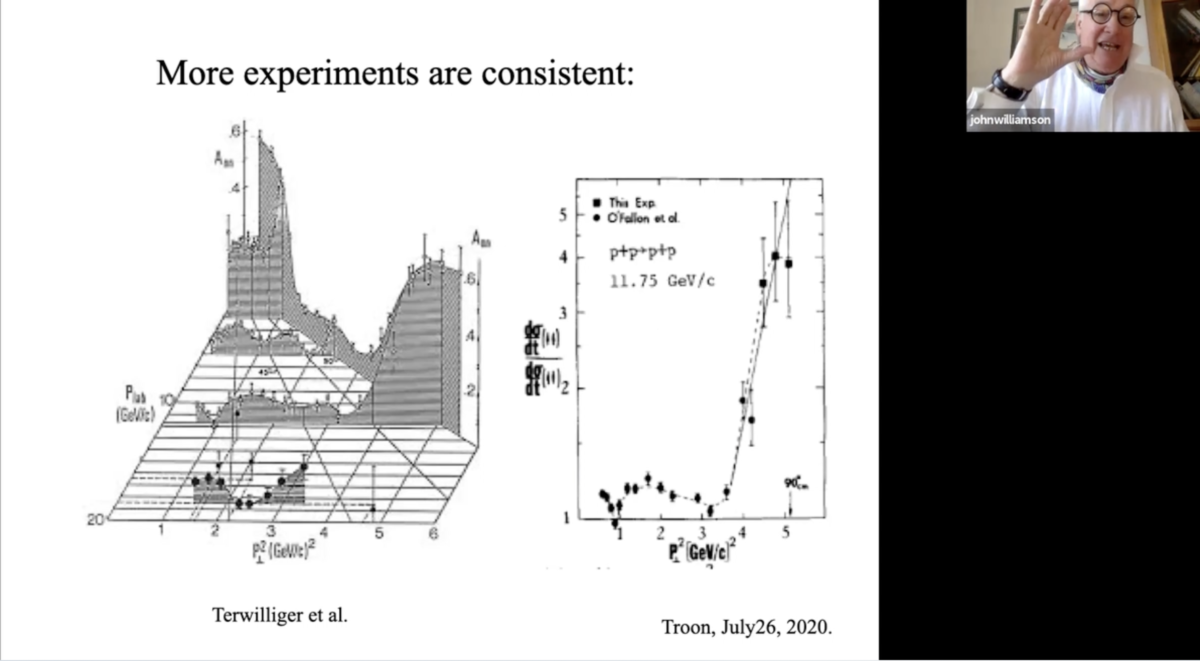
Dr. John G. Williamson describes the relativistic quantum mechanics of collective systems in the new paradigm: Atoms, high-temperature superconductors and the quantum fluid in the solid state. Thinking within the new relativistic quantum theory allows a hitherto unavailable physical insight into the inner workings of “elementary” particles, both alone and in combination with each other. Among other things the talk will discuss the paired di-electron boson in high-temperature superconductors, the quasiparticle electron involved in quantum transport, and the synergy of electrons, protons and neutrons in atoms.
Recorded: GMT20200726
This is the QA&D sessions following Prof. Colin Rourke’s presentation explaining his model of quasars. (See presentation QC093)
Recorded: 2020 07 19 at 10 41 GMT 7
This is the QA&D sessions following Prof. Colin Rourke’s presentation on his model of inertial frame drag in relation to galaxy structure, as presented in his book “A New Paradigm For The Universe.” (QC091)
Recorded: 2020-07-19 at 10_03 GMT-7
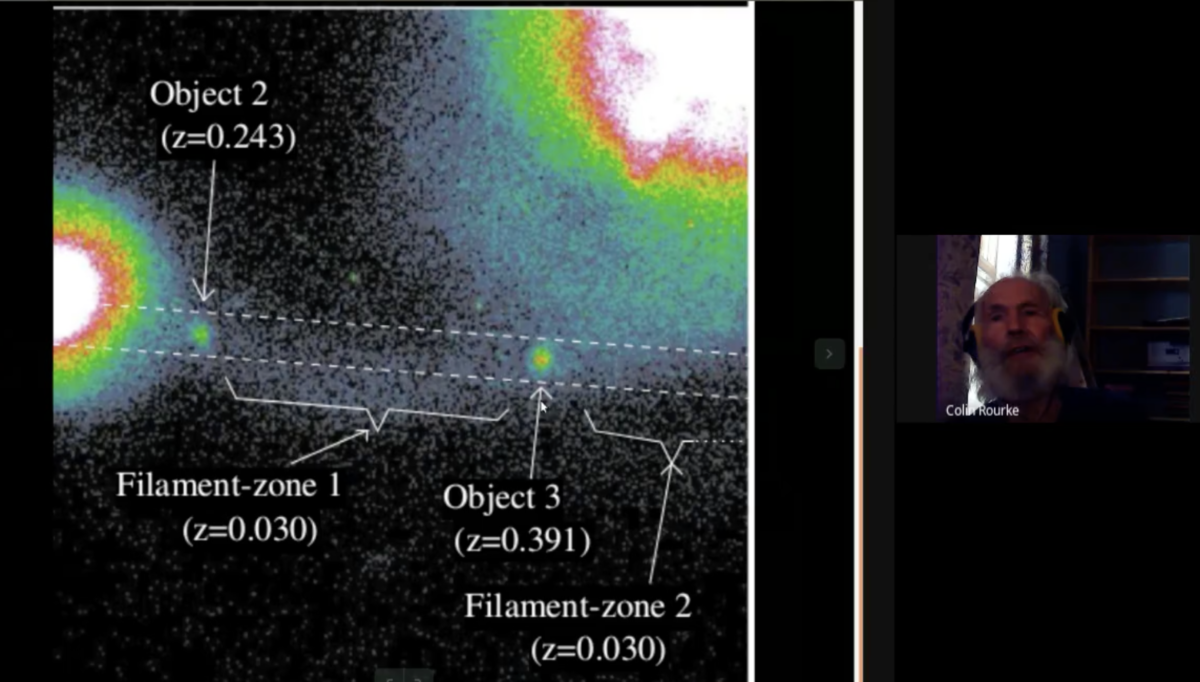
Prof. Colin Rourke explains his model of quasars, as presented in his book “A New Paradigm For The Universe.” (See presentation QC091)
Recorded: 2020 07 19 at 10 23 GMT 7
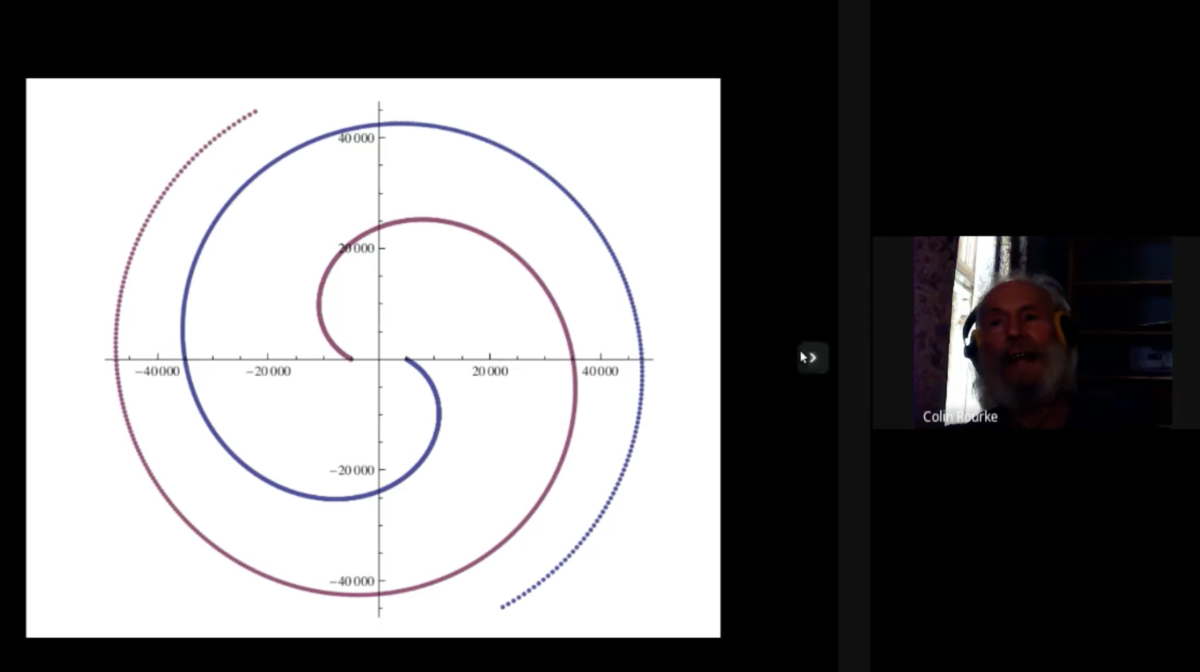
Prof. Colin Rourke explains his model of inertial frame drag in relation to galaxy structure, as presented in his book “A New Paradigm For The Universe.”